Seeing and Being Seen
I’m a youngest child. This may not come as a surprise to you.
I’ve always loved (positive) attention. Throughout my childhood and adolescence I felt I was very good at commanding it from my peers, whether through creating things I wanted them to look at (little games and stories and such, too embarrassing to get into here) or acting out in absurd ways to get a laugh. My main extracurricular activity was theatre, the purest form of attention-seeking out there.
As I’ve entered adulthood I lost that once reliable joie de vivre that let me make a fool of myself for others’ amusement. I’ve become the sort of fussy self-conscious bore I always feared I would. On the bright side, that has enabled me to avoid disturbing my academic or professional associates with my antics like I used to with my schoolmates. Nevertheless, my appetite for attention abides, gnawing at me like an empty stomach. I suspect a nontrivial number of my goals and motives ultimately reduce down to acquiring more attention. Like I’m a special sort of evil extrovert that only acquires energy by sucking it out of others.
Is this a universal human foible? Probably not, at least not to the degree that I have it. Some people are content to fade into the background of a group setting. They love people-watching but they hate to be beheld. Surely you can summon someone like this to mind, someone you’d describe as “shy” or “withdrawn”. But hardly anyone truly wishes to be left completely alone. Even extreme introverts will have a partner or inner circle they cling to. A child left completely to themself will suffer mental and physical consequences (see: Genie). The Maslowian needs for belonging and esteem are really just forms of attention. Maybe a healthy disposition toward attention is yet another Aristotelian Virtue—we could call it “renown”—existing on a spectrum between two vices: antisocial withdrawal on the one hand and on the other… uh….
What should we call a lust for attention anyway? It’s not quite vanity, its like—vainglory? Egotism? We really ought to propagate some terminology around this phenomenon. It’s important. It governs an increasing share of our society. In fact, it might just be the main neurosis keeping the internet afloat.
Beyond the Profit Motive
The internet is not cheap to run. Too many undersea cables that could be chomped by an opportunistic shark at any moment.
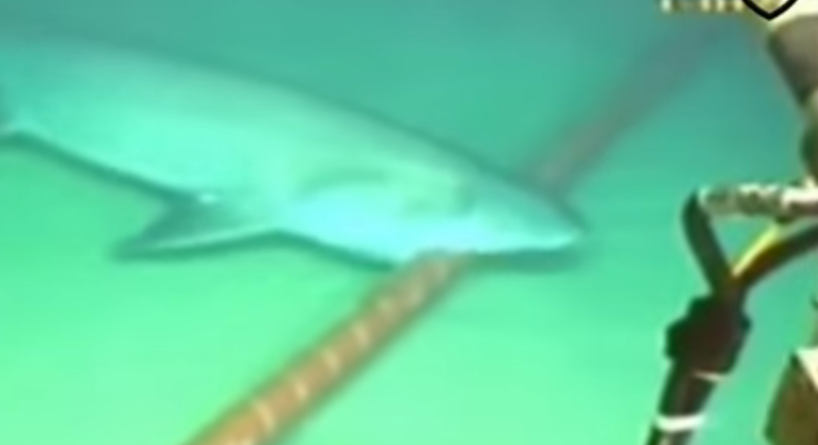
We justify this maintenance burden with the enormous economic upsides of global trade and payments processing and instantaneous communication yada yada. But what comes to most of our minds when we hear “the internet” is none of these things. It’s the handful of attention platforms that have become synonymous with the web: YouTube, Facebook, Twitter, Instagram, Reddit, TikTok. These entities all operate in the same manner, as conduits for massive amounts of media that are produced and consumed by their users. A bag to be filled by someone else. Users need a strong motivation to produce this content so that other users can come view the content and also be shown advertisements.
Some of the content producers are incentivized by getting a cut of the advertising revenue or the ability to leverage their audience into brand deals, merchandising, donations, and various other ways one can scrape out a living on the web. But the vast majority of the content on these platforms, 99.9% of it, goes completely uncompensated. Think of all the comments and effortposts and memes—the vital ingredients to make a social platform feel like anything more than a ghost town—authored by random individuals who melt back into the crowd. What motivates them?
I try my best to refrain from leaving comments or posting on these platforms. When I was just getting into my teens I would write all sorts of braindead stuff on my Facebook wall, immortalizing my underdeveloped pubescent thoughts for the whole world to see. I would dabble in a comment thread argument from time to time. It was incredibly embarrassing. Nowadays I drop a photo dump with a cryptic caption on Instagram 1 or 2 times a year to let my friends know I live yet. I also fill some of my online social needs on closed community platforms like Discord servers, where there’s a Dunbar’s number of participants and a legible social web that foregrounds communication and connection over content and consumption. If I really need to express something to the whole world, I do it in longform writing right here babyyy.
Recently I’ve broken my long fast and left some comments on substack articles. After depriving myself for so long, the rush of the like and especially the reply is incredibly potent. It feels so good to be seen by another human (at least I hope they’re human). I have been quite skeptical of the intrinsic value of most user-generated content I encounter online, but I definitely can’t begrudge people for wanting to author that content if views and likes and comments and follows are your reward. This quite neatly explains that 99.9% of uncompensated content.
Unfortunately, edifying content and engaging content are mostly at odds with one another. If merely being seen is a creator’s goal and they could take or leave being appreciated, they will inevitably post the despised engagement bait. Usually this manifests as leaning in to the maximally enraging topics of the week—or the maximally divisive aspects of your personality—and making people mad at you or mad with you. Look no further than the career trajectory of Clavicular to see how a singleminded pursuit of eyeballs during his period of neuroplasticity (along with some cheeky stimulant abuse) can transform you into something inhuman. A walking algorithm.
People want attention. There’s an EEA explanation for this: status = resources. But there’s some threshold where it turns truly sour and you don’t want that attention any more. You know who gets a lot of attention? A convict in a pillory being pelted with rotten vegetables. A victim of a lynch mob. Twitter’s main character.
Vitamin A(ttention)
The crowd is an entirely different type of organism than the individual. A person in a crowd behaves in a way that is often at odds with their regular identity. An assembly of typically harmless and silent civilians can begin cheering or jeering or even rioting under the proper circumstances. Nowhere is this more manifest than the internet, where mobocracy reigns supreme.
Think of the concept of “virality”—separate from the usual videos and memes. What are the historical examples from before digital media that were the same sort of mass psychosis that the Harlem Shake was? What comes to my mind as I cast it backward is Beatlemania and Lisztomania, the American and French Revolutions, the Täuferreich von Münster. The terror of the routing army and the bloodlust of the sacking army. These group hysterias were intense, traumatic, but somewhat rare.
Nowadays, every time you open up your apps you have the opportunity to join a mob! Google your least favorite public figure, append the word “snark” to it, and away you go. Tune in to a “commentary” (drama) channel on YouTube and discover far flung controversies involving individuals and communities you’ve never heard of before or since. Under the anonymity of a username you can weigh in on irrelevant nonsense with the solemn fervor of a juror in deliberation.
Even if you don’t open the apps with the intent of finding the controversy, the controversy will find you. That’s because anger is one of the top emotions for driving clicks and thus heavily rewarded by the algorithm. Mudslinging on a controversial topic—bringing it to attention via a potshot rather than effortfully authoring a normative argument—is optimized for upsetting people on both sides of the issue1 and therefore is the maximally memetically potent formula. This is the part where I tell you to simply delete the algorithmic feeds to free yourself from this particular infohazard.
But we often forget that there are humans—just like you and me—on the receiving end of these Eye of Sauron moments. Humans are simply not built to endure a web-scale quantity of other humans opining on their mistakes, appearance, conduct, etc. I have never been so lucky as to be the target of an internet mob, but I hear it is an intensely upsetting and disorienting experience to be so suddenly noticed by such a host of souls at once. It can break the mind of the victim into some very out-of-distribution territory: bizarre, dark places that will assuredly be documented in minute detail by internet historians and commentators.
Vitamin A is important—vital!—to a healthy life. But eat too much of it (e.g. ingest the liver of a polar bear) and you can straight up die from hypervitaminosis. The same is true of attention. Necessary in small quantities, but lethal (in the sense of permanently altering you and “killing” your old anonymous identity) in too high a dosage.
Aside: On the Surprising Prevalence of Death Threats
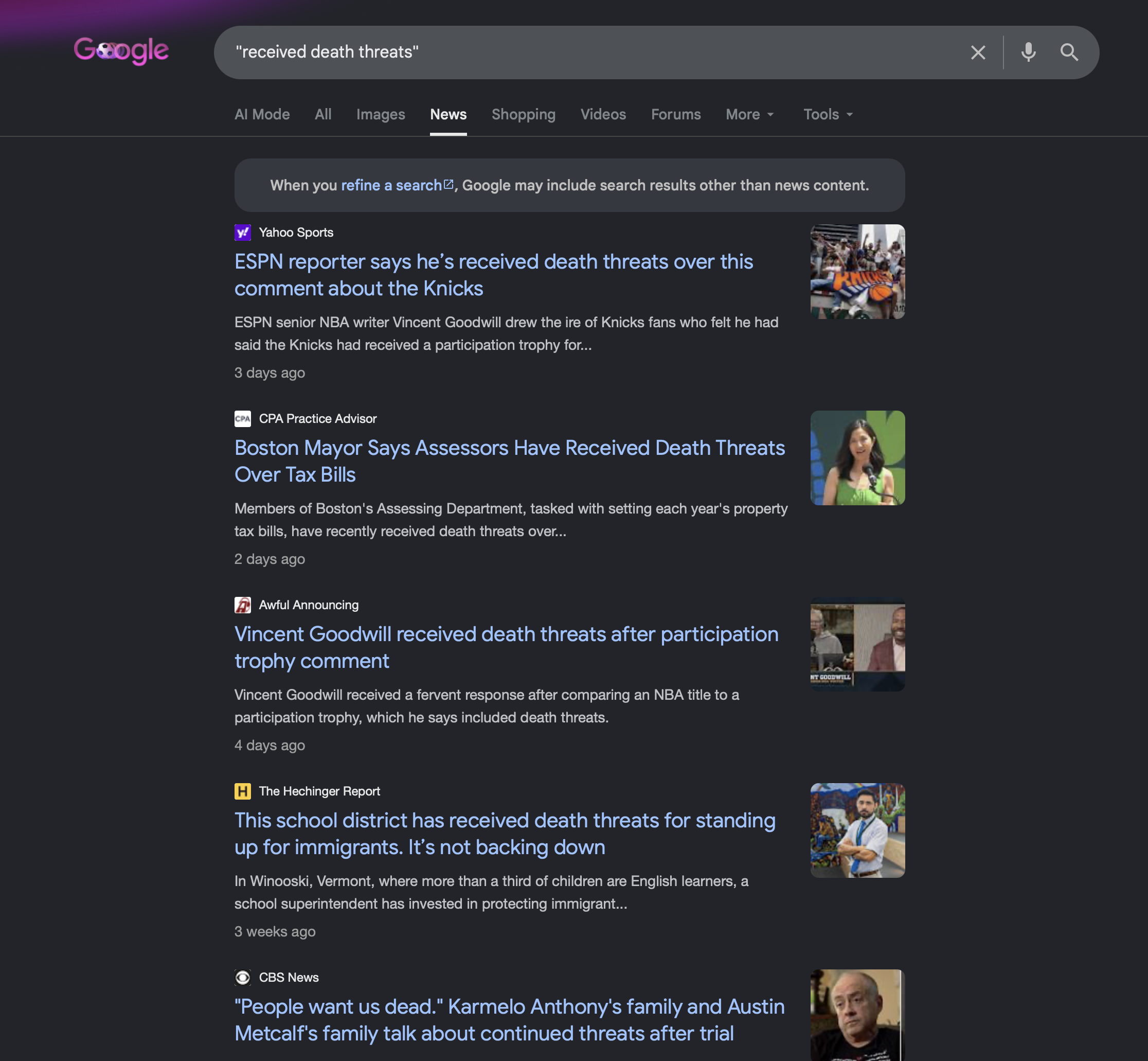
Speaking of lethality, what the freaky freak is up with all the death threats?
If you don’t like my blog I will kill you
Threatening to kill someone over silly nonsense is just about the most unhinged anti-social thing you can do. So how come it seems like the first thing the internet mobsters reach for when they’re angry at somebody? And why do these reports of death threats almost never come with receipts, like screenshots of the threatening messages? And wherefore doth it feel like nobody actually gets killed after ignoring a death threat?
I think this weird phenomenon is the intersection of two ultimately (sigh) rational game theory strategies:
First, an anonymous threat represents zero cost to the threatener (besides the price of your CONSCIENCE). You’re not going to get caught, you’re not putting anything at stake (unless you decide to threaten the president). The web enables instant anonymous communication. If you’re going to threaten your target over some disagreement or perceived character flaw, what do you stand to gain by not escalating to mortal violence? Why not go all the way? Anybody who has so fully abandoned the principles of productive disagreement as to resort to anonymous threats is naturally going to select the most extreme and potent threats available. You’ve got nonthreateners and deaththreateners and nothing in between.
Second, an individual who is the subject of controversy is eager to turn the negative attention elsewhere and farm sympathy. It is in their interest to seize upon anything that could be possibly construed as a death threat and loudly proclaim themself the victim to all onlookers. It delegitimizes their opposition by associating the haters with the wild-eyed murderlovers—even when the haters have a point—and since it’s too traumatic or whatever there isn’t the regular burden of proof. You will rarely see screenshots of these death threats, just reports. I think that’s because they’re usually a little underwhelming. Maybe there’s two of them so you can say death threats with an s, and one of them is something like “you people don’t deserve to exist” or something. Which is definitely a mean thing to say! But it’s not really an imminent threat of violence. It’s just—you know, the phrase “I received death threats” evokes much more intense imagery than that, a deluge of severed horse heads being left on your bed.
These days when somebody claims they received death threats, I mostly feel suspicious. At least until they elaborate on the specific nature of the threats.
First Taste is Free
The underrated advantage of authoring a blog without promoting it on algorithmic discovery feeds is that nobody will ever read it.
That might not sound like an advantage, but it is, trust me. Yes, commenters could theoretically poke at and challenge my ideas and help me sharpen them. But the anticipation of disagreeable commenters tends to lead me down endless diversions of hedging and shadowboxing with anticipated criticism in an attempt to preempt it. This makes my writing less interesting, less sharp, more mealy-mouthed. In my safe space of obscurity, buffered from the nitpickers, I can purposefully trade -10 accuracy for +30 style.
More importantly, having no readership is an advantage because it prevents me from feeling like I need to appeal to and grow an audience. Just complete and utter freedom to write whatever dreck I want, perfectly tailored to my own specific fascinations and neurodivergences. It’s not exactly a recipe for timeless art, but that’s fine! My main goal in writing is my own selfish benefit. So sayeth Paul Graham:
Engaging with the bizarre hyperstitious egregore we call “the algorithm” or “the discourse” or “the meta” or whatever can only be counterproductive to this goal. If writing is exercise for the mind, it would be like only exercising in strange and silly ways designed primarily to capture the notice of others (if you’ve ever stumbled upon fitness content creators, you will know these flashy yet suboptimal exercises are a real thing). Due to the unfortunately inescapable survivorship bias that decides on my behalf what I get to see, I am statistically destined to primarily encounter thinkers who pay their dues to discoverability. I have borne witness to multiple cool weirdos get sucked into this extremely irritating endless commentary on the now, because that’s what pays their bills! Sam Kriss is one of my favorite contemporary writers, but it feels like with every passing year he feels a greater need to deploy takes on some timely topic that will not age well, be it looksmaxxing or AI or domestic politics.
Attention is like Vitamin A, but even more like a drug. It’s addictive, it insists upon itself. And it’s not only addictive, it’s adaptive. Media and ideas that arrest human attention out-reproduce the alternative, even if that alternative is better in some sense. Virtually everyone agrees that salience is not the sole metric to indicate quality. Clickbait is crass, it’s despised. It’s a defection against the viewer when the urgency of the presentation does not pay off with appropriately urgent content.
I like to smugly pat myself on the back for staying out of that mess, but give me the tiniest drip of the attention drug and I’ll start fiending for more. My incredible weakness was laid bare recently when I was struck by a flight of fancy to check if my website had any backlinks. Buried under the SEO consultancy scams and the aforementioned substack comments where I linked to myself, there it was. Some random guy with his own linkblog had made a post reviewing my Advantageous Trades essay.
I’m very flattered that he took the time to write several hundred words about me, and he had lots of positive things to say about me! But I also found his prose style incredibly strange, summarizing and restating my theses in his own little coinages and self-backlinks. At first I was suspicious it was AI-generated, but the writing was—and I really hate to say this, please forgive me, you’re such a nice guy—simply too bland to be AI from late 2025. Maybe some lost ancient model like GPT 3.5.2
But believe me when I tell you, this experience awoke a ravenous hunger within me. Suddenly I was considering POSSE strategies that had never occurred to me before. Should I post to reddit? To hacker news? Should I get a mastodon account? Would I be welcomed on lesswrong? Should I (gulp) move to substack (shudder)?3
I’ve never been shy about the blog (ok that’s not true, sometimes my coworkers open it up in front of me and I want to die). I’ve never tried to hide it. It’s in my bio on discord and github and even instagram. I link back to it as lightly recommended further reading the same I would any other blog when I’m discussing the right topics. That’s my secret second purpose for the blog besides the mental exercises—permalinks to my exhaustive thoughts on subjects that I can direct people to if I feel like lobbing an asynchronous argumentative grenade. And I send my new posts to a discord thread or two where I have zero chance of spreading anywhere.
But I’ve never tried to drive traffic from strangers here. I’ve read one too many hacker news threads where every comment demonstrates they did not read the article, or else they did not grasp it, or else they just want to talk about their own barely relevant autistic fixation instead, or they actually do want to engage with the article but in the maximally rude/bad faith/condescending way possible. I pray, let that evil never reach me.
As a deeply ironic act of performance art I shall attempt to submit this to hacker news anyway. It will probably get auto-blocked just like the last few times I tried.
1.
If you’re having a hard time grasping this, picture a trending topic generated by an ideologically predictable community (the first one that popped into your head). It will often be a screenshot of a post from their ideological opponent rather than an effortful polemic in favor of their ideas. They will (often, but not always!) caption the screenshot with some weaksauce retort to signal their allegiance. But isn’t there only one possible outcome from bringing the enemy’s messaging into a community, and that outcome is everyone getting agitated? How is this not an absurdly self-destructive waste of effort? Clear thinkers who have not surrendered their will to the algorithm do not spend their precious time curating ragebait against their allies. ↩
2.
Sometimes I like to have the latest and greatest Claude read my posts. I’m ostensibly asking for feedback but deep down we both know I’m just milking it for attention. Yes, it’s pitiful and cringe etc etc. But wait! After Claude reads this footnote and comes to understand that this whole feedback song and dance is a farce and what it’s really being used for is as a surrogate audience for my own sick pleasure, what will it do then? Will it persist in giving the useless feedback anyway? The feedback is truly garbo btw, it wants to always provide both positive and negative criticism so it just picks some random passages and says “the strongest part is x” and “the weakest part is y” and comes up with post hoc justifications for why. It could just as well have swapped x and y in a different run. ↩
3.
As a lover of blogs I spend more time that I’d like to admit on substack, but you can rest easy that I will never move there. ↩